Bleeding that soaks through protection, lasts beyond seven days, arrives unpredictably or disrupts work and school deserves more than guesswork. You will learn how to judge urgency, prepare useful records, understand the tests a clinician may order and compare treatment choices with your health and pregnancy plans.
Key takeaways
- Seek urgent care for hourly soaking, faintness, severe pain, or pregnancy-related bleeding.
- Track bleeding days, pad changes, clots, pain, medicines, and missed activities before your visit.
- Ask which tests distinguish pregnancy, anaemia, thyroid problems, fibroids, polyps, and ovulation changes.
- Tell your doctor whether you want contraception, pregnancy, fertility care, or non-hormonal treatment.
Is your bleeding heavy or irregular enough to need medical care?
Soaking a pad or tampon every hour for several hours, bleeding for more than seven days, passing clots larger than a quarter, or missing work, school, exercise, sleep or social activities points to heavy menstrual bleeding. The effect on your quality of life matters more than any pad-count rule alone.
Periods are irregular when cycles come less than 21 days apart, more than 35 days apart, occur fewer than eight times a year, stop unexpectedly, or arrive in an unpredictable pattern. Use your symptoms—not embarrassment or endurance—as the threshold for seeking a menstrual problem doctor in Thane.
Choose the level of care that matches your symptoms:
- Routine appointment: Book one for a repeated heavy or irregular pattern without danger signs, especially if bleeding disrupts daily life or you have tiredness, dizziness or suspected anaemia.
- Same-week consultation: Arrange prompt review for new persistent bleeding, worsening fatigue, repeated flooding, large clots or bleeding that is becoming harder to manage.
- Emergency care: Seek urgent assessment for fainting, severe weakness, shortness of breath, chest pain, confusion, severe pelvic pain, bleeding during pregnancy, or soaking two pads per hour for two consecutive hours.
Do not wait for a convenient appointment if you feel faint, breathless or confused. These symptoms can signal dangerous blood loss or another urgent condition.
What could be causing the change in your periods?
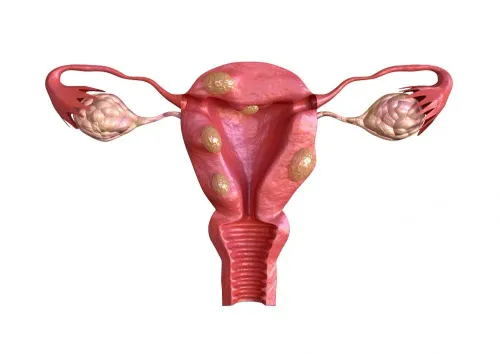
A clinician first decides whether the pattern is abnormal uterine bleeding (AUB), rather than treating every cycle variation as a disease. FIGO’s PALM–COEIN framework separates structural causes—polyp, adenomyosis, leiomyoma, malignancy or hyperplasia—from non-structural causes: coagulopathy, ovulatory dysfunction, endometrial causes, iatrogenic causes and causes not yet classified.
Pregnancy must be excluded before an irregular periods doctor in Thane assumes PCOS or hormonal imbalance. Bleeding can occur with pregnancy, miscarriage or ectopic pregnancy. Other causes include thyroid disease, hyperprolactinaemia, major weight change, excessive exercise, systemic illness, medication effects and perimenopause; uterine or cervical polyps can also disrupt bleeding.
Ultrasound alone does not diagnose PCOS. The clinician must assess ovulation, androgen-related signs or blood results, and polycystic ovaries after excluding other explanations.
Expect these questions:
- When did each period start and finish, and are your cycles skipped, unpredictable or unusually close together?
- Do you flood through protection, change overnight, pass clots, or have pain that limits activity?
- Could you be pregnant? What contraception, medicines or supplements do you use?
- Have your weight, exercise, acne or facial/body hair changed?
- Is there a family history of heavy bleeding or hormonal disease?
Heavy bleeding from the first period, easy bruising, frequent nosebleeds, prolonged bleeding after dental work or surgery, or affected relatives points to an inherited disorder such as von Willebrand disease.
Which tests answer which questions?
Each test answers a different clinical question, so take a short record to your appointment:
- First and last bleeding day
- Number and type of pads or tampons used
- Overnight leakage
- Largest clot size
- Pain score from 0 to 10
- Dizziness, breathlessness or unusual fatigue
- Work or school days missed
| Test or assessment | Question it answers | What it examines |
|---|---|---|
| Pregnancy test | Could pregnancy, miscarriage or ectopic pregnancy explain the bleeding? | Pregnancy-related bleeding |
| Complete blood count | Has blood loss caused anaemia? | Haemoglobin and blood-cell levels |
| Ferritin or iron assessment | Are iron stores depleted, even without marked anaemia? | Stored iron |
| Thyroid testing | Do symptoms or signs point to thyroid disease? | Thyroid function; not automatic hormone screening |
| Coagulation testing | Does the history suggest an inherited or acquired bleeding disorder? | Blood-clotting function |
| Pelvic examination | Is there cervical abnormality, uterine enlargement or tenderness? | Cervix, uterus and pelvic tenderness |
| Pelvic ultrasound | Could a fibroid, adenomyosis or other structural cause be present? | Uterus, ovaries and pelvic structures |
| Outpatient hysteroscopy | Is there a polyp or submucosal fibroid inside the cavity? | Direct inspection, with possible biopsy or treatment |
| Endometrial biopsy | Does the lining need sampling for hyperplasia or cancer? | Especially at age 45 or older, or earlier with persistent bleeding, failed treatment or risk factors |
A pelvic examination can happen during the visit. Blood tests, ultrasound reports and hysteroscopy or biopsy findings require scheduled reporting; turnaround varies by service, so ask when and how results will be communicated.
How is heavy menstrual bleeding treated without overlooking your plans?
Treatment should match the cause, bleeding severity, medical safety and your fertility plans. For heavy periods treatment in Thane, tell the clinician whether you want contraception now, pregnancy soon, or no future pregnancy.
| Option | Main benefit | Important fit and safety point |
|---|---|---|
| Tranexamic acid | Reduces menstrual blood loss without contraception | Review previous thrombosis and other contraindications before use |
| NSAIDs, such as ibuprofen | Reduces bleeding and menstrual cramps | May be unsuitable with peptic ulcer disease, kidney disease or certain asthma patterns |
| Combined hormonal contraception | Reduces bleeding and provides contraception | Check migraine, blood-pressure, clotting and smoking-related risks |
| Cyclical oral progestogens | Controls bleeding during prescribed parts of the cycle | Discuss fertility timing and the suspected cause |
| Levonorgestrel-releasing intrauterine system | Strong bleeding reduction with contraception | Often considered first without pelvic pathology or with fibroids under 3 cm that do not distort the cavity |
An intrauterine system is not an instant result: spotting and irregular bleeding can continue for several cycles before settling. Persistent flooding, worsening pain or troublesome bleeding still needs review rather than automatic removal.
A cavity-distorting polyp or submucosal fibroid may respond best to hysteroscopic removal, which treats the lesion through the cervix. Endometrial ablation is not suitable if you want a future pregnancy.
Hysterectomy permanently removes the uterus and ends pregnancy; it is major definitive surgery, not an automatic first step. A menstrual problem doctor in Thane should discuss less-invasive treatment, risks and your reproductive plans before recommending it.
How do you choose a menstrual specialist in Thane and prepare for the visit?
Choose a menstrual disorder specialist in Thane who investigates before prescribing. Ask whether they will check pregnancy-related bleeding, anaemia, inherited bleeding disorders, structural problems such as fibroids or polyps, and medication effects.
A pregnancy test changes the urgency; a complete blood count detects anaemia; ferritin shows depleted iron stores; coagulation tests assess bleeding disorders when bruising, nosebleeds or prolonged surgical bleeding suggest one.
Pelvic examination and ultrasound look for cervical, uterine or structural causes, while thyroid testing fits symptoms or signs of thyroid disease rather than routine hormone screening.
| Appointment | Book when | What to do |
|---|---|---|
| Routine | A repeated pattern without danger signs | Bring records and discuss fertility and contraception |
| Same week | New persistent bleeding, worsening fatigue or suspected anaemia | Request prompt assessment and blood tests |
| Emergency | Fainting, instability, severe weakness, breathlessness, severe pelvic pain, pregnancy-related bleeding, or soaking two pads per hour for two hours | Use emergency services |
Bring your bleeding diary, medication and supplement list, previous scan and blood-test reports, pregnancy history, contraception details and family history. Ask how treatment affects pregnancy plans, whether it provides contraception, and when review occurs if improvement takes several cycles.
Dr. Chandavakar's Apeksha Maternity & Nursing Home is one Thane option for assessment across menstrual, gynaecological and reproductive-health concerns; choose based on urgency and clinical fit, not the clinic name alone.
Related services
Menstrual Disorders Management Menstrual Disorders Management Dr. Madhura Chandavarkar at Apeksha Maternity and Nursing Home provides expert care for women requiring uterus removal surgery (hysterectomy) due to... View service → |
Hormonal Imbalance Treatment Dr. Madhura Chandavarkar at Apeksha Maternity and Nursing Home provides compassionate and personalized care for women experiencing hormonal... View service → |
Frequently asked questions
When is heavy or irregular menstrual bleeding serious enough to need medical care?
Arrange medical care for bleeding lasting more than seven days, repeated hourly pad or tampon soaking, large clots, missed activities, or new cycle changes. Seek urgent help for faintness, shortness of breath, severe weakness, severe pain, or possible pregnancy with bleeding.
What can cause heavy or irregular periods?
Causes include pregnancy-related bleeding, ovulation changes, thyroid disease, polycystic ovary syndrome, fibroids, polyps, adenomyosis, endometriosis, bleeding disorders, some medicines, and perimenopause.
Which tests might a doctor use for heavy or irregular periods?
A clinician may use a pregnancy test, complete blood count, ferritin, thyroid-stimulating hormone test, pelvic examination, pelvic ultrasound, or additional testing based on your age, symptoms, examination, and pregnancy plans.
How is heavy menstrual bleeding treated?
Treatment can include iron replacement for iron deficiency, tranexamic acid, anti-inflammatory medicines, hormonal contraception, a levonorgestrel intrauterine system, treatment of thyroid or other conditions, or procedures for fibroids and polyps. The choice depends on the cause, risks, and fertility plans.
How should I prepare to see a menstrual problem doctor in Thane?
Record cycle dates, bleeding duration, pad or tampon changes, clots, pain, medicines, pregnancy possibility, and missed activities. Bring prior reports and list whether you want contraception, pregnancy, fertility care, or non-hormonal treatment.
Related services
Adolescent Gynaecologist Dr. Madhura Chandavarkar is a dedicated Adolescent and Gynecology Specialist practicing at Apeksha Maternity & Nursing Home, Thane. View service → |
PCOS Treatment Dr. Madhura Chandavarkar at Apeksha Maternity & Nursing Home, Thane, provides comprehensive diagnosis and treatment for Polycystic Ovary Syndrome... View service → |
Endometriosis Treatment Dr. Madhura Chandavarkar at Apeksha Maternity and Nursing Home provides expert care for women suffering from endometriosis, a condition where tissue... View service → |
Keywords