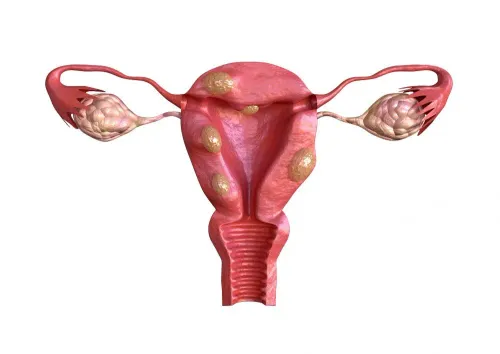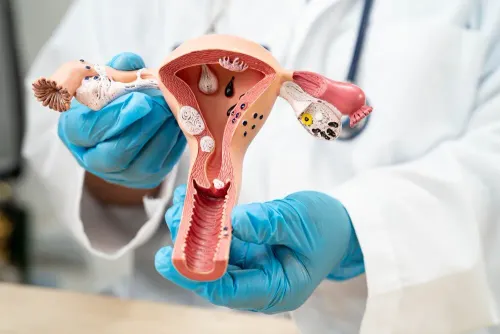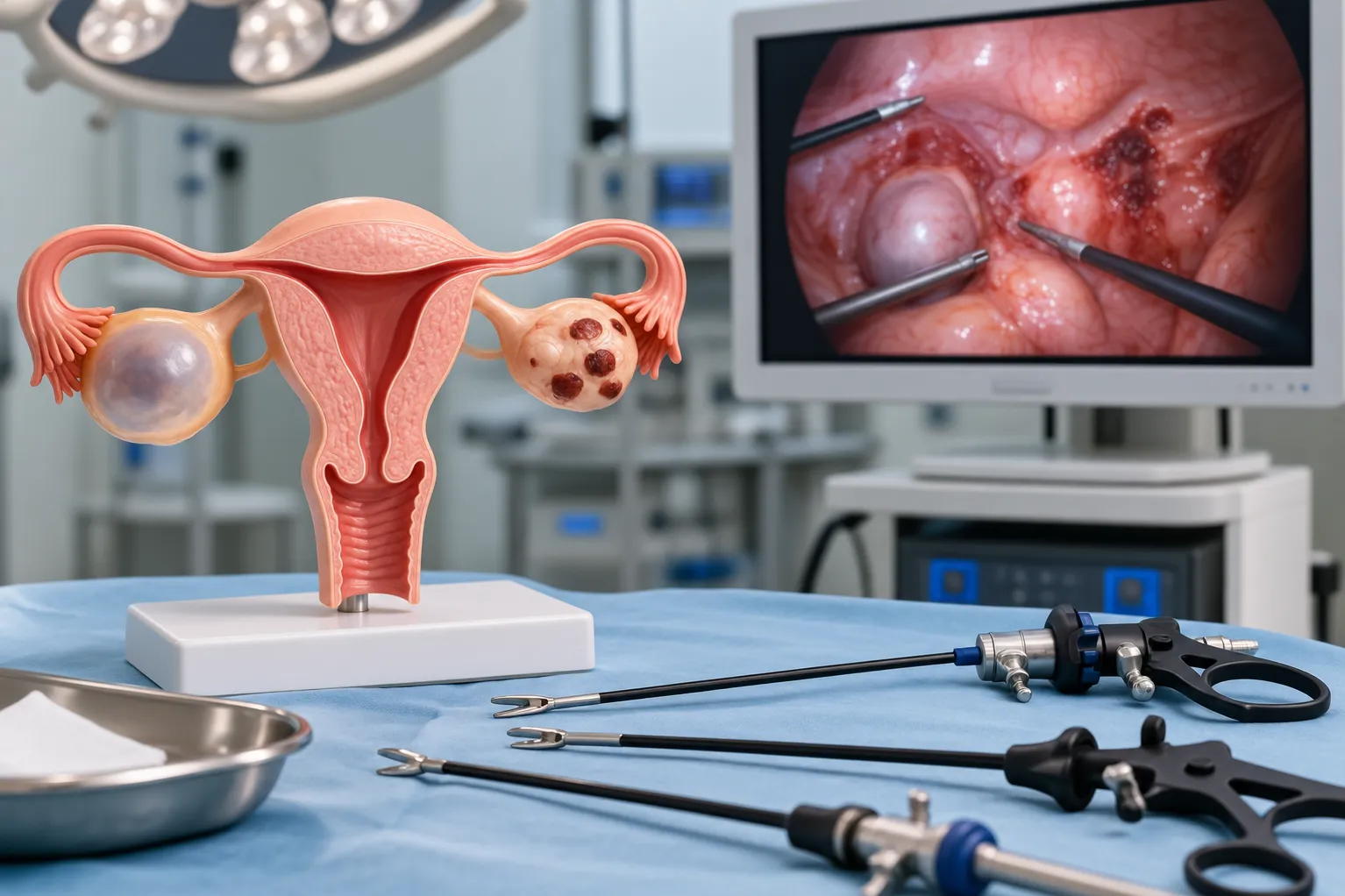
Ovarian cysts and endometriosis can both cause pelvic pain, but they are different conditions. An ovarian cyst is a fluid-filled or solid-containing structure involving an ovary. Endometriosis occurs when tissue similar to the uterine lining grows outside the uterus.
Because symptoms can overlap, women considering ovarian cyst and endometriosis surgery in Thane need a diagnosis-led plan rather than assuming that every cyst or painful period requires an operation.
When an Ovarian Cyst May Be Observed
Many ovarian cysts in reproductive-age women are related to normal ovulation and resolve without treatment. Observation with repeat imaging may be recommended when a cyst appears uncomplicated and symptoms are mild.
Surgery may be considered when a cyst:
- Persists or increases in size
- Causes ongoing pain or pressure
- Has complex or concerning imaging features
- Is associated with ovarian twisting
- Ruptures with significant symptoms
- Appears after menopause
- Cannot be confidently characterized
- Interferes with fertility treatment in a relevant way
Sudden severe pelvic pain, faintness, vomiting, or weakness requires urgent assessment because torsion or internal bleeding may need immediate care.
When Endometriosis Surgery May Help
Endometriosis can cause painful periods, pain during intercourse, chronic pelvic pain, bowel or bladder symptoms, and fertility difficulties. Symptoms do not always correspond to the visible extent of disease.
Treatment may include pain-relief medicines, hormonal therapy, fertility planning, surgery, or a combination. Surgery may be discussed when:
- Pain persists despite appropriate medical treatment
- An endometrioma affects an ovary
- Deep disease is suspected
- Organ function may be affected
- Diagnosis remains uncertain
- Fertility-related circumstances justify intervention
Repeated ovarian surgery can affect healthy ovarian tissue. Fertility goals and ovarian reserve should therefore be considered before removing an endometrioma.
What Surgery May Involve
Laparoscopy is commonly used for suitable ovarian cyst and endometriosis procedures. Depending on the findings, the surgeon may remove the cyst while preserving ovarian tissue, release adhesions, excise endometriosis lesions, or restore pelvic anatomy.
Patients should ask whether the planned operation is intended to diagnose disease, relieve pain, protect organ function, improve fertility prospects, or achieve several of these goals.
Questions Worth Asking
Before consenting to surgery, discuss:
- What do the scan findings suggest?
- Is observation or medical treatment reasonable?
- Could the cyst be related to endometriosis?
- Will ovarian tissue be preserved where possible?
- How could surgery affect ovarian reserve?
- Might bowel, bladder, or ureteric involvement require additional expertise?
- What symptoms may recur after treatment?
- What follow-up will be needed?
These questions are particularly important for women planning pregnancy.
Dr. Chandavakar's Apeksha Maternity and Nursing Home evaluates pelvic pain, ovarian cysts, endometriosis, and minimally invasive surgical options in Thane, Maharashtra. Previous scans, blood reports, operative notes, fertility records, and details of earlier hormonal treatment can support a more informed assessment.
Surgery can be valuable when it has a clear objective. The best decision accounts for symptom severity, imaging, age, fertility priorities, previous procedures, and the potential consequences of both operating and continuing observation.
Keywords