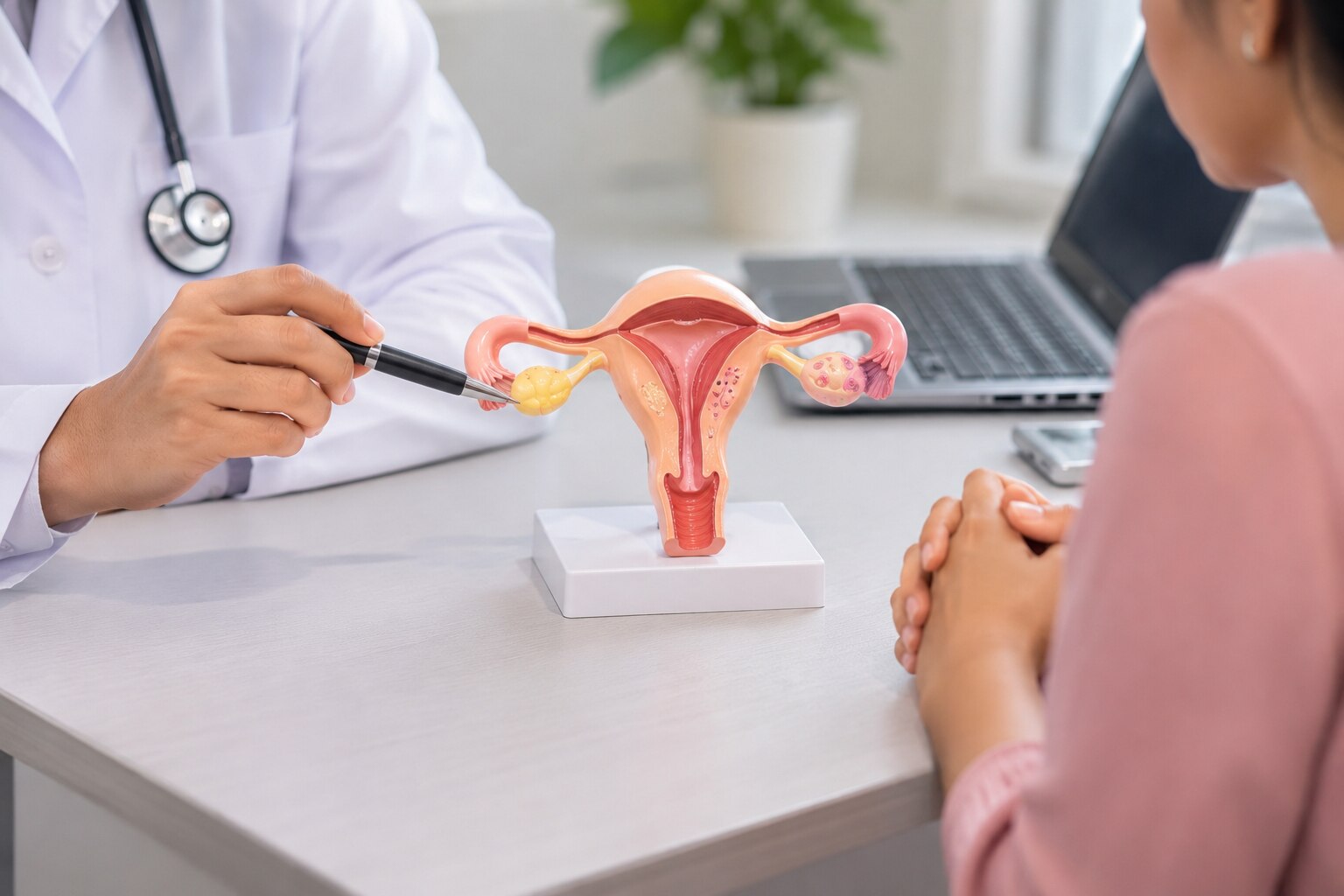
Sudden pelvic pain can require emergency care, while recurring or activity-limiting pain deserves a planned assessment even when it is not severe. By the end, you will know which symptoms need urgent attention, when to book a consultation, what information to bring, and how doctors choose between medicines, physiotherapy and surgery.
Key takeaways
- Seek emergency care for sudden severe pain, fainting, fever, vomiting, or heavy bleeding.
- Book a consultation for recurring pelvic pain, painful periods, or pain during sex.
- Record timing, triggers, bleeding, urinary symptoms, bowel changes, and medicines.
- Ask how examination, pregnancy testing, ultrasound, and follow-up will guide treatment.
When pelvic pain needs emergency care
Go to an emergency department rather than booking a routine appointment if pelvic or lower-abdominal pain is sudden, severe, or rapidly worsening. Call emergency services if you faint, feel markedly dizzy, develop shoulder-tip pain, heavy vaginal bleeding, fever, vomiting, or feel very unwell.
| Situation | What to do | Why it matters |
|---|---|---|
| Sudden severe pain with collapse, dizziness, shoulder-tip pain or heavy bleeding | Attend the nearest emergency department now | These signs can indicate internal bleeding, including a ruptured ectopic pregnancy |
| Possible pregnancy with any pelvic pain | Seek prompt medical assessment, even before a missed period | Ectopic pregnancy can begin with mild or one-sided pain and bleeding, then become life-threatening |
| Severe pain with fever or vomiting | Seek emergency care | Ovarian torsion, appendicitis and serious infection need rapid evaluation |
| Recurrent or mild pain without warning signs | Book a consultation | A pelvic pain doctor in Thane can assess gynaecological, urinary, bowel and muscular causes |
One-sided pain with vaginal bleeding is especially urgent if you have a positive pregnancy test. Do not wait for a routine appointment if pain worsens, you collapse or bleeding becomes heavy.
Do not rely on repeated painkillers, leftover antibiotics, hormonal medicines or other self-treatment while waiting. These measures can mask deterioration and do not treat causes such as ectopic pregnancy, ovarian torsion or appendicitis.
When recurring pain deserves a planned consultation
Arrange a gynaecology or pelvic-pain consultation when pain returns, lasts beyond one menstrual period, progressively worsens, wakes you at night, interrupts work, exercise or sex, or requires repeated painkillers. Waiting until it becomes severe can delay diagnosis. This applies whether you are seeking pelvic pain treatment in Thane or care elsewhere.
| Pattern | What it may suggest | What to record |
|---|---|---|
| One-sided pain | Ovary, urinary tract or bowel | Side, duration and sudden or gradual onset |
| Central cramping | Uterine or menstrual pattern | Relation to periods and cycle stage |
| Pain with sex, urination or bowel movements | Infection, endometriosis, pelvic-floor, bladder or bowel cause | Trigger, timing and associated symptoms |
The causes of pelvic pain in women include pelvic inflammatory disease, urinary infection or stones, constipation, irritable bowel syndrome, adenomyosis, vulvodynia, pelvic-floor muscle pain, endometriosis, fibroids and ovarian conditions.
Fever, abnormal discharge, bleeding between periods or after sex, pain during sex, or painful urination needs prompt assessment because pelvic inflammatory disease can have mild symptoms yet cause lasting complications.
Pain can also come from the abdominal wall, hip, spine, nerves or bowel, so location and triggers guide the evaluation. Pain after menopause needs assessment, especially with bleeding. Keep a brief diary of pain severity, cycle timing, bleeding, discharge, urinary symptoms and bowel changes; it gives the clinician a clearer pattern than memory alone.
What to record and expect at the first assessment
Bring a clear timeline, not just a description of “bad pain.” Before visiting a pelvic pain doctor in Thane, record:
- Last menstrual period and pregnancy possibility or test result
- Pain score from 0 to 10, start date, duration, location, cycle timing and triggers
- Bleeding pattern, vaginal discharge, fever, nausea, urinary symptoms, constipation or diarrhoea
- Pain during sex and bowel movements
- Previous pregnancies, pelvic or abdominal surgeries, contraception and medical conditions
- Every medicine or supplement tried, including antibiotics and over-the-counter painkillers
Carry previous ultrasound reports, operative notes and complete medication details. If the pain comes and goes, take a symptom diary showing dates, menstrual days, activities, meals and medicines used.
The clinician may examine your abdomen and, with your consent, perform a pelvic examination. Tests are selected from your symptoms and findings rather than ordered identically for everyone.
| Test | What it may check | When it may be offered |
|---|---|---|
| Urine pregnancy test | Pregnancy or possible ectopic pregnancy | Pregnancy is possible or periods are late |
| Urine testing | Urinary infection or blood | Burning, urgency, flank pain or urinary changes |
| Infection swabs | Vaginal or cervical infection | Discharge, fever, bleeding or pain during sex |
| Blood tests | Infection, anaemia or inflammation | Fever, bleeding or concerning examination findings |
| Pelvic ultrasound | Cysts, fibroids, adenomyosis and other structures | Gynaecological causes need assessment |
| MRI or laparoscopy | Selected deeper or persistent causes | Findings remain unclear or symptoms continue |
A normal ultrasound does not exclude all endometriosis, pelvic-floor pain or nerve pain. Ask when results will be reviewed and which change requires earlier contact.
How treatment choices compare after the cause is assessed
The right pelvic pain treatment in Thane depends on the suspected cause, pain severity, pregnancy status and test findings. A normal ultrasound does not rule out endometriosis, pelvic-floor pain or nerve pain, so persistent symptoms need clinical review rather than dismissal.
| Option | What it involves | When it applies |
|---|---|---|
| Observation and symptom relief | Heat, rest and suitable analgesics | Short-lived pain when examination shows no urgent problem |
| Hormonal treatment | Medicine that suppresses or regulates menstrual activity | Cycle-related pain, adenomyosis or suspected endometriosis after reviewing pregnancy plans and medical history |
| Antibiotics | Treatment directed at infection | Confirmed or strongly suspected pelvic inflammatory disease or another bacterial infection |
| Pelvic-floor physiotherapy | Techniques to reduce muscle overactivity and improve coordination | Pain with penetration, pelvic-floor tenderness, or some bladder- or bowel-related pain |
| Surgery | Removal, repair or treatment of an identified abnormality | A structural problem, an urgent condition, or symptoms that persist despite medical care |
Antibiotics do not treat endometriosis, fibroids or every ovarian cyst. Hormonal treatment is not suitable for every person, particularly when pregnancy is being planned or certain medical conditions are present.
Surgery is appropriate when imaging or examination identifies a problem that benefits from an operation, such as a significant cyst, fibroid or other structural cause. It is also urgent for conditions such as ovarian torsion or ectopic pregnancy; it is not the first choice for every pain pattern.
At Dr. Chandavakar's Apeksha Maternity & Nursing Home, ask how the proposed treatment matches your findings, what alternatives exist and when follow-up will occur. That discussion helps you weigh relief, side effects, recovery time and the risk of delaying treatment.
Related services
Pelvic Pain Treatment Dr. Madhura Chandavarkar at Apeksha Maternity and Nursing Home offers expert diagnosis and treatment for pelvic pain affecting women of all ages. View service → |
Fibroids Treatment Dr. Madhura Chandavarkar at Apeksha Maternity and Nursing Home offers comprehensive diagnosis and treatment for uterine fibroids, which are... View service → |
What to do when pain persists or tests look normal
Book another review if pain continues despite the initial plan, worsens, repeatedly interrupts sleep or daily activities, or returns after temporary relief. Do not dismiss pain during sex, bowel movements or urination as normal. These symptoms can point toward endometriosis, pelvic-floor dysfunction, infection, bladder disease or bowel disease.
A normal ultrasound does not mean the pain is imaginary. It may not show every form of endometriosis, nerve pain or pelvic-floor muscle pain. Chronic pelvic pain often has overlapping causes of pelvic pain in women, such as endometriosis or adenomyosis alongside irritable bowel syndrome, bladder symptoms, nerve pain or musculoskeletal problems.
Ask at the next appointment:
- Does the pattern require further gynaecological evaluation?
- Would pelvic-floor physiotherapy, bowel or bladder assessment, pain-management support or a second opinion help?
- Which warning signs require urgent care while testing continues?
| Pain pattern | Assessment to discuss | Why it matters |
|---|---|---|
| Cyclical pain, painful periods or painful bowel movements | Endometriosis or adenomyosis review | A normal scan does not exclude every form of endometriosis |
| Pain with sex, urination or pelvic pressure | Pelvic-floor, bladder and sexual-pain assessment | Muscle tension and urinary conditions can coexist with gynaecological disease |
| Persistent pain with normal tests | Broader bowel, nerve, hip, spine and abdominal-wall assessment | Pelvic pain does not always come from the uterus or ovaries |
When choosing a female pelvic pain specialist in Thane, select someone who assesses gynaecological, urinary, bowel and musculoskeletal causes rather than focusing only on scans or surgery. Keep updating your symptom diary.
Frequently asked questions
When does pelvic pain need emergency care?
Go to an emergency department for sudden, severe, or rapidly worsening pain, especially with fainting, marked dizziness, shoulder-tip pain, heavy vaginal bleeding, fever, vomiting, or feeling very unwell.
When should recurring pelvic pain be assessed by a doctor?
Book a planned consultation when pain keeps returning, disrupts daily activities, causes painful periods or sex, or occurs with bleeding, urinary symptoms, bowel changes, or possible pregnancy.
What should you record before a pelvic pain appointment?
Write down when the pain started, its location and severity, cycle timing, triggers, bleeding, discharge, urinary or bowel symptoms, pregnancy possibility, medicines, and previous test results.
What happens when pelvic pain tests look normal but pain persists?
Return for follow-up and discuss the next step. A normal initial test does not explain every cause, so your clinician may review the history, examination, diagnosis, treatment response, and need for further assessment.
Related service
Endometriosis Treatment Dr. Madhura Chandavarkar at Apeksha Maternity and Nursing Home provides expert care for women suffering from endometriosis, a condition where tissue... View service → |
Keywords