Pain that follows your menstrual cycle, discomfort during sex or bowel movements, unusual bleeding, and difficulty conceiving need a structured assessment rather than repeated painkillers alone. You will be able to identify warning signs, understand the tests used, compare pain and fertility treatments, and prepare better questions for your consultation.
Key takeaways
- Track pelvic pain, bleeding, bowel symptoms, and cycle days before your appointment.
- Seek urgent care for sudden severe pain, fainting, fever, or heavy bleeding.
- Pain medicines and hormonal treatment suit different goals than trying to conceive.
- Ask how suspected endometriosis could affect fertility, surgery decisions, and follow-up.
Which symptoms suggest endometriosis, and when is pain urgent?
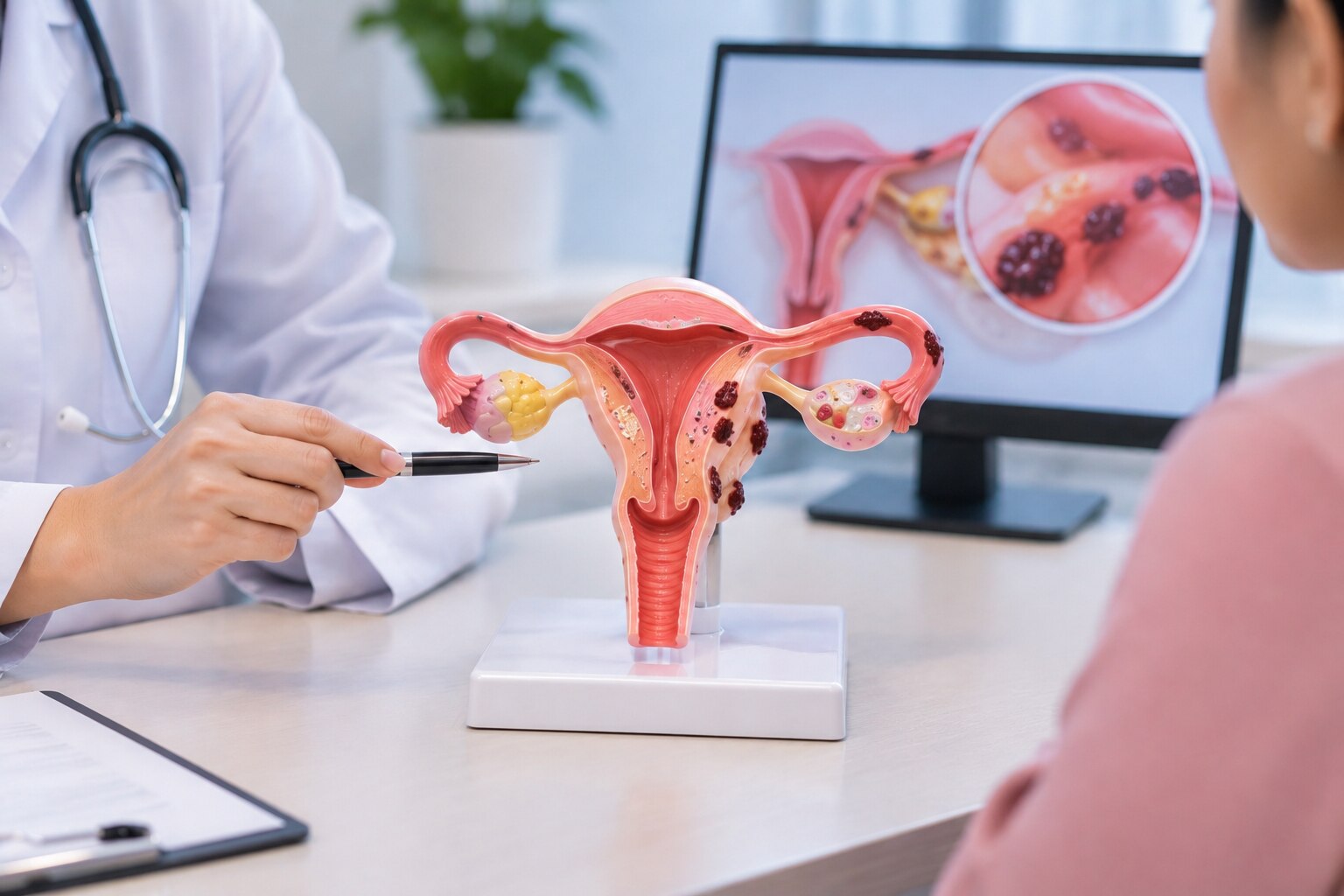
Endometriosis is suggested by a pattern of cyclical symptoms, not pelvic pain alone. Pain severity does not reliably show disease extent: limited disease can cause severe pain, while extensive disease can cause few symptoms. Track symptoms by cycle day before seeking endometriosis treatment in Thane.
- Periods that are painful enough to disrupt work, sleep or normal activity
- Pain during or after sex
- Painful bowel movements, especially during menstruation
- Stinging or painful urination during menstruation
- Pelvic pain between periods or chronic pelvic pain
- Heavy or irregular bleeding
- Bloating, nausea or marked fatigue
Seek prompt medical assessment when symptoms could indicate an acute problem rather than routine endometriosis.
| Sign or situation | Why urgent assessment is needed |
|---|---|
| Sudden severe pelvic pain | Ovarian torsion, a ruptured cyst or haemorrhage must be excluded |
| Fainting or marked dizziness | This can signal significant bleeding or circulatory compromise |
| Fever with pelvic pain | Pelvic infection requires assessment and treatment |
| Soaking-heavy bleeding | Haemorrhage or severe blood loss must be checked |
| Positive pregnancy test with pelvic pain | Ectopic pregnancy must be ruled out, even without heavy bleeding |
What happens during an endometriosis evaluation?
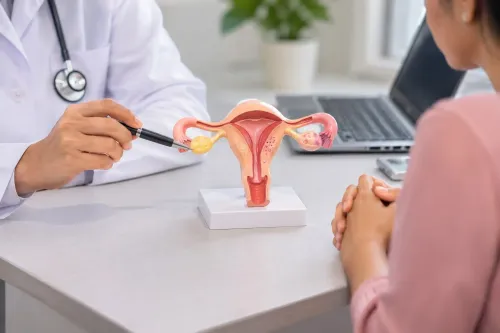
An endometriosis doctor in Thane will start with your history, not a scan. Expect questions about cycle timing, pain location and duration, pain between periods, bowel and bladder symptoms, pain during sex, abnormal bleeding, previous operations, medicines, pregnancy history and fertility goals.
Bring these details to the appointment:
- Your last three menstrual dates and bleeding pattern
- When pain starts, how long it lasts and what relieves it
- Pain with bowel movements or urination
- Previous pelvic infections, operations and scan reports
- Current medicines, including painkillers and contraception
- Previous pregnancies, attempts to conceive and fertility priorities
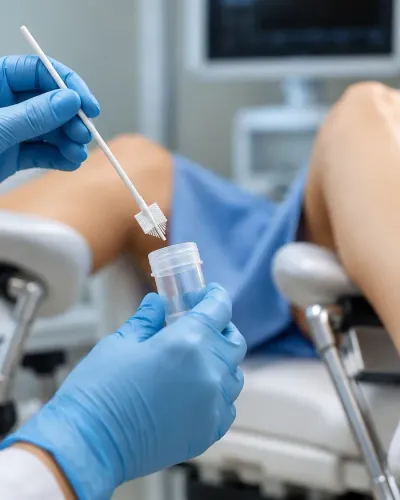
The examination may include a pelvic examination. A pregnancy test is relevant when pregnancy is possible, while blood tests are chosen to investigate competing diagnoses rather than to confirm endometriosis.
Transvaginal ultrasound is a common initial scan when appropriate. It can show an endometrioma, fibroids, adenomyosis or some deep disease, but a normal scan does not rule out superficial endometriosis. Specialist ultrasound or MRI can map deep disease involving the bowel, bladder or ureter.
Suspected endometriosis means symptoms and examination or imaging support the diagnosis; surgically confirmed disease requires tissue or direct laparoscopic findings. Diagnostic laparoscopy is considered when symptoms persist, scans are inconclusive, treatment is unsuitable, or certainty would change management.
Pelvic inflammatory disease, ovarian cysts, irritable bowel syndrome, urinary conditions and pelvic-floor pain can produce similar symptoms, so the evaluation must test those possibilities too.
Which treatments can reduce pain when pregnancy is not planned now?
If pregnancy is not planned now, clinicians usually start with anti-inflammatory pain relief or hormonal suppression rather than repeated escalation of analgesics. Ibuprofen or naproxen can help inflammatory period pain when medically suitable; check for stomach ulcers, kidney disease, blood thinners, asthma reactions and pregnancy risk first.
| Option | Ovulation, bleeding and contraception | When it applies |
|---|---|---|
| Combined hormonal contraception | Usually suppresses ovulation, reduces bleeding and provides contraception | A common first-line choice when oestrogen is safe |
| Progestogen | Often suppresses ovulation; bleeding may become lighter, irregular or absent; contraceptive effect depends on the medicine | Useful when combined contraception is unsuitable or ineffective |
| Levonorgestrel intrauterine system | Usually leaves ovulation intact, markedly reduces uterine bleeding and provides contraception | Useful when heavy bleeding is prominent and an intrauterine device is acceptable |
| GnRH medicine | Strongly suppresses ovarian hormone activity and often stops bleeding; do not assume reliable contraception | Specialist-directed treatment when simpler options fail; discuss hot flushes, mood effects and bone-density loss |
Hormonal suppression controls symptoms; it does not remove endometriosis lesions and is not fertility treatment while you are trying to conceive. GnRH treatment needs discussion of duration, add-back hormones and bone health.
Follow-up should measure pain, sleep, work, sex, bowel and bladder function, side effects and quality of life—not only scan findings. If pain persists, endometriosis care in Thane may add pelvic-floor physiotherapy for muscle spasm, psychological support, or specialist pain management.
Persistent pain is a reason to review the diagnosis and plan, not simply keep increasing painkillers.
How should treatment change when fertility is a priority?
If pregnancy is a priority, request fertility planning before waiting for every pain symptom to settle. An endometriosis specialist in Thane should align symptom relief with your reproductive timeline rather than treating these as the same goal.
1. Assess age, duration of trying, ovulation, ovarian reserve, tubal patency, semen analysis, symptoms, disease extent and previous surgery. Seek fertility referral even when pain treatment is still incomplete.
2. Separate symptom control from preconception treatment. Combined hormonal contraception, progestogens and other hormonal suppression prevent or reduce ovulation while used, so they are not treatments for conception during active attempts.
3. Individualise endometrioma surgery. It may improve follicle access or relieve selected symptoms, but removing ovarian tissue can reduce ovarian reserve; surgery is not routine before assisted reproduction or solely because a cyst is present.
4. Discuss deep disease involving the bowel, bladder or ureter with clinicians experienced in organ-specific risks and multidisciplinary care. Surgery can be followed by recurrent disease or persistent pain. If pregnancy is not being attempted immediately, postoperative hormonal suppression may reduce recurrence risk.
Hysterectomy belongs only in carefully selected situations after counselling, when childbearing is complete and less-invasive options have failed or are unsuitable. It is not a guaranteed cure, and removing the ovaries causes loss of ovarian hormones with long-term consequences.
Your plan should therefore state when to try naturally, when to consider assisted reproduction, and which symptoms or risks justify changing course.
How do you choose an endometriosis care plan in Thane?
Choose an endometriosis specialist in Thane who turns your priorities into measurable goals, not a sequence of scans and pain medicines. Ask whether the clinician will record separate pain and reproductive goals before recommending treatment.
| Option | What it can show | What it cannot settle |
|---|---|---|
| Transvaginal ultrasound | Endometrioma, fibroids, adenomyosis and some deep disease | A normal scan does not exclude superficial endometriosis |
| Specialist ultrasound or MRI | The location and extent of deep disease near bowel, bladder or ureter | It does not make every lesion visible |
| Laparoscopy | Direct inspection and possible treatment when findings would change management | It carries surgical risks and is not automatically the next step |
- What would MRI or laparoscopy change in my plan?
- If bowel, bladder or ureter disease is suspected, how experienced is the team with that organ?
- Can you involve colorectal, urology, fertility or pain specialists when needed?
- How will you review treatment, and when will we change it?
A consultation at Dr. Chandavakar's Apeksha Maternity & Nursing Home can connect menstrual symptoms, pelvic examination, imaging, pain relief and fertility planning in one discussion. Bring a three-month symptom diary, cycle dates, bleeding changes, medication list, previous scan reports and fertility information.
At follow-up, track daily function, quality of life, side effects, ovarian reserve and fertility outcomes where relevant—not only lesion appearance. Your priorities belong in the review.
Related service
Endometriosis Treatment Dr. Madhura Chandavarkar at Apeksha Maternity and Nursing Home provides expert care for women suffering from endometriosis, a condition where tissue... View service → |
Frequently asked questions
Which symptoms suggest endometriosis, and when is pain urgent?
Cyclical pelvic pain, painful periods, pain during sex, painful bowel movements or urination during menstruation, heavy bleeding, and difficulty conceiving can suggest endometriosis. Seek urgent care for sudden severe pain, fainting, fever, vomiting, or heavy bleeding.
What happens during an endometriosis evaluation?
An evaluation includes your symptom and menstrual history, a pelvic examination when appropriate, and imaging such as transvaginal ultrasound. Your doctor will use the findings to discuss likely causes and next steps.
Which treatments can reduce pain when pregnancy is not planned now?
Treatment can include anti-inflammatory pain medicines, hormonal options that suppress ovulation or menstruation, and surgery for selected cases. The choice depends on symptoms, examination findings, side effects, and your future fertility plans.
How should treatment change when fertility is a priority?
Tell your doctor before starting hormonal suppression because it prevents pregnancy while you use it. Your plan may focus on evaluating ovarian reserve, fallopian tubes, semen factors, endometriomas, and whether surgery or assisted conception is appropriate.
How do you choose an endometriosis care plan in Thane?
Choose an endometriosis doctor in Thane who discusses pain control and fertility together, explains imaging findings, sets follow-up points, and refers for advanced surgery or fertility care when needed.
Keywords