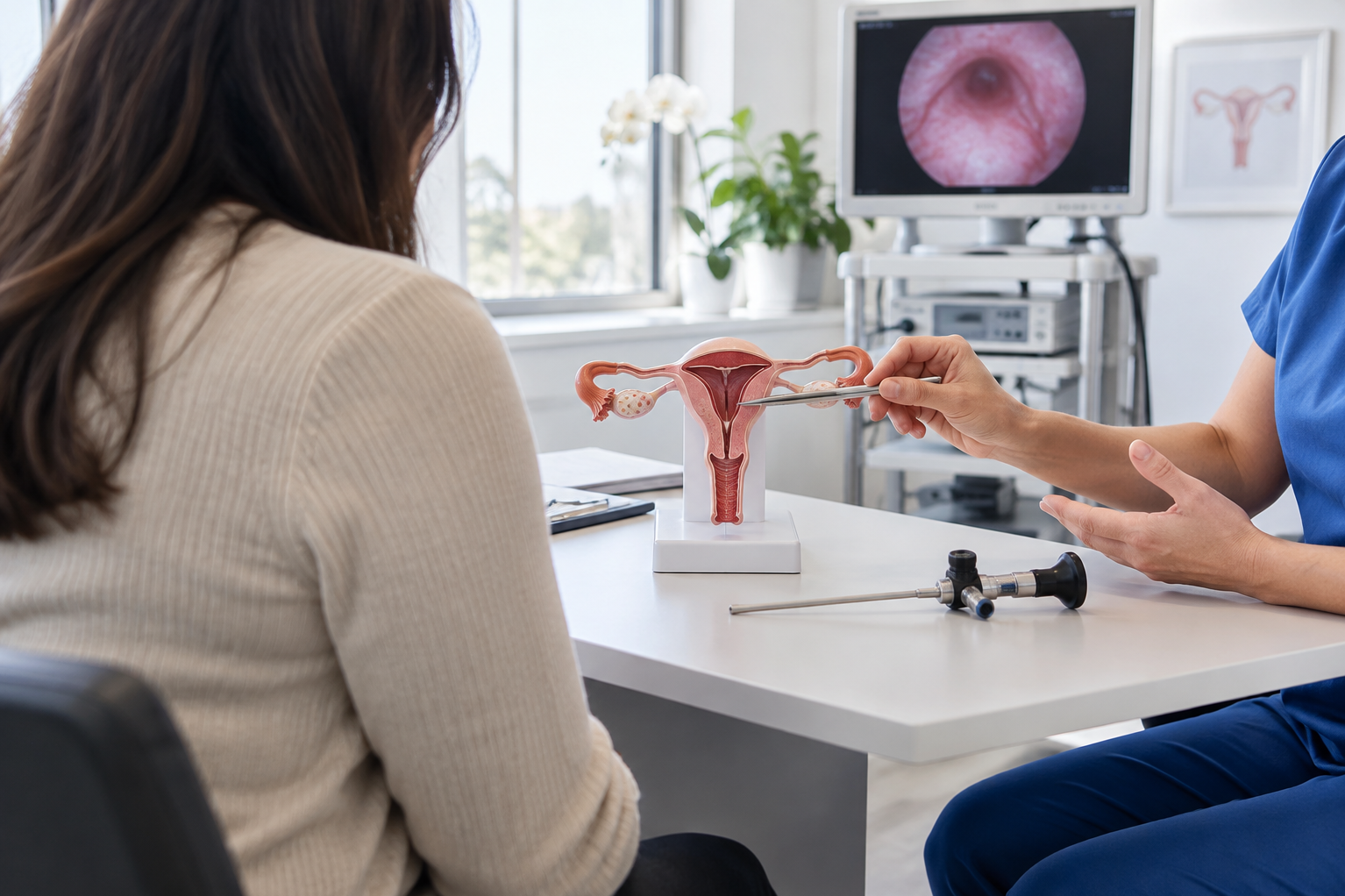
Hysteroscopy and hysterectomy sound similar, but they are fundamentally different. Hysteroscopy uses a narrow camera to examine or treat the inside of the uterus. Hysterectomy is an operation to remove the uterus.
Understanding this distinction is essential for women evaluating hysteroscopy and hysterectomy surgery in Thane, particularly when they have abnormal bleeding, fibroids, polyps, or other uterine conditions.
What Is Hysteroscopy?
A hysteroscope is passed through the vagina and cervix into the uterine cavity. It does not usually require an abdominal incision.
Diagnostic hysteroscopy may help investigate:
- Abnormal uterine bleeding
- Bleeding after menopause
- Suspected uterine polyps
- Fibroids projecting into the cavity
- Intrauterine adhesions
- Certain fertility concerns
- Recurrent miscarriage in selected cases
- Findings identified on ultrasound
Operative hysteroscopy may be used to remove a polyp, treat some submucosal fibroids, divide adhesions, or obtain tissue for examination.
Hysteroscopy treats conditions inside the uterine cavity. It does not remove the uterus.
What Is Hysterectomy?
Hysterectomy removes the uterus and permanently ends the possibility of carrying a pregnancy. Menstrual periods also stop after the uterus is removed.
It may be recommended for selected patients with:
- Severe fibroid-related symptoms
- Persistent abnormal bleeding
- Adenomyosis
- Uterine prolapse
- Certain cancers or precancerous conditions
- Chronic symptoms not controlled by suitable alternatives
The cervix, fallopian tubes, or ovaries may or may not be removed depending on the diagnosis and surgical plan. Removal of the uterus does not automatically mean removal of the ovaries.
Choosing Between the Procedures
Hysteroscopy and hysterectomy are not interchangeable options of different sizes. They have different objectives.
A small polyp inside the uterine cavity may be treated hysteroscopically. A patient with widespread uterine disease, severe symptoms, completed childbearing, and unsuccessful previous treatment may be advised to consider hysterectomy.
The decision depends on:
- The confirmed diagnosis
- Severity of symptoms
- Response to previous treatment
- Age and reproductive plans
- Uterine and ovarian findings
- Overall health
- Personal preferences
- Possibility of less extensive alternatives
Questions to Ask Before Surgery
Patients should clarify:
- What condition is being treated?
- Is tissue sampling required?
- Are medicines or less invasive procedures reasonable?
- Will the uterus be preserved?
- If hysterectomy is planned, will the cervix or ovaries be removed?
- Which surgical route is recommended?
- What are the major risks?
- How long will recovery take?
- Will the removed tissue be examined by a pathologist?
Dr. Chandavakar's Apeksha Maternity and Nursing Home provides diagnostic evaluation and surgical counselling for uterine conditions in Thane. Ultrasound reports, biopsy findings, bleeding records, medication history, and previous operative documents should be brought to the consultation.
No patient should consent to surgery based only on a procedure name. Understanding what will be examined, treated, preserved, or removed is central to informed decision-making.
Keywords